
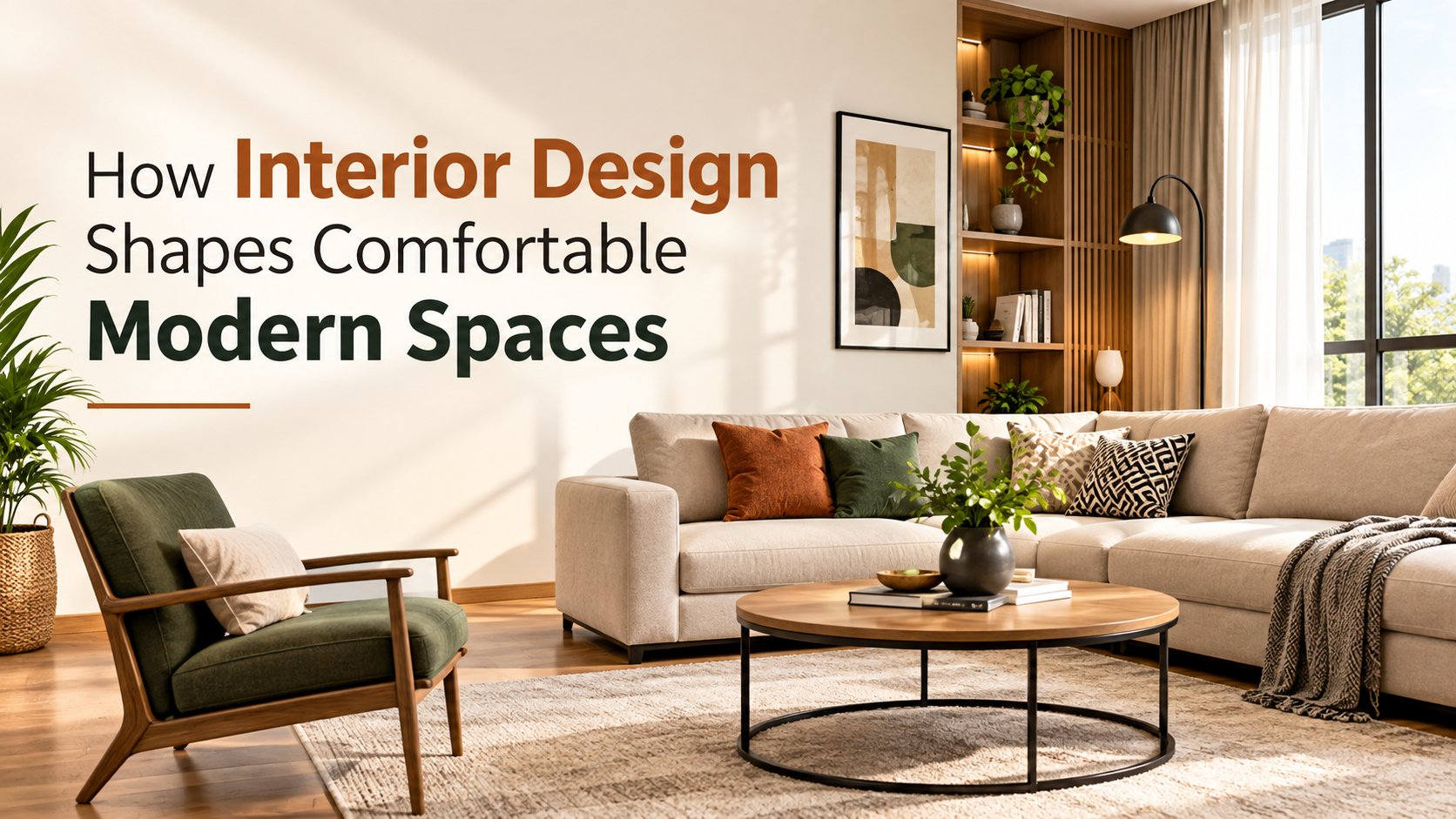
Interior design has moved beyond decoration. It now functions as a practical discipline that shapes how people feel, work, and rest inside their homes. A well-designed space doesn’t just look good in photos — it supports daily routines, reduces stress, and makes comfort feel effortless. Here’s how the core elements of interior design work together to create genuinely comfortable modern spaces.
What Makes a Space Feel “Comfortable”?
Comfort isn’t just physical. While a soft sofa helps, true comfort is largely psychological. Rooms that feel comfortable tend to offer visual balance, a sense of order, and sensory moderation — lighting, sound, and color that are neither too harsh nor too flat. They also give occupants a degree of personal control, such as the ability to adjust light or rearrange furniture to suit their needs. When these traits are missing, a space can quietly generate stress even when the cause isn’t obvious to the person living in it.
Why Does Layout Matter So Much?
Layout is the foundation comfort is built on, long before color or furniture enter the picture. Poor flow forces people to navigate around obstacles and makes everyday tasks harder than they need to be. A comfortable layout usually includes:
- Defined zones in open-plan areas (cooking, dining, relaxing) without needing physical walls
- Clear pathways with enough spacing between furniture
- Logical proximity between related functions, like placing a reading nook near natural light
Good flow is often invisible — people simply feel that a space “makes sense” without knowing exactly why.
How Does Natural Light Affect Comfort?
Few elements influence comfort as strongly as natural light. Daylight-filled spaces feel larger, healthier, and more welcoming than rooms relying only on artificial lighting. It also supports circadian rhythms, which affect mood, energy, and sleep quality. Modern design maximizes available light through sheer curtains instead of heavy drapes, mirrors placed to reflect daylight, and light-colored wall finishes that bounce it further into a room. Where natural light is limited, layered artificial lighting — ambient, task, and accent — helps replicate the same sense of openness.
What Role Do Materials Play in Comfort?
Materials affect comfort on both a physical and emotional level. Natural materials like wood, stone, and wool tend to feel warmer and more authentic, while overly polished synthetic surfaces can feel sterile if left unbalanced. Texture adds another layer of comfort — a soft rug against a hardwood floor, or a woven throw on a leather sofa, creates sensory variety that keeps a room feeling inviting rather than flat. Materials that feel warm to the touch, such as fabric or wood, also contribute to a sense of coziness even in fully climate-controlled homes.
How Does Color Influence Mood in a Space?
Color affects emotional response more directly than most people realize:
- Warm tones (terracotta, muted yellow, earthy brown) create intimacy and warmth
- Cool tones (soft blues, greens) promote calmness and are common in bedrooms
- Neutral base palettes with accent colors offer flexibility without visual fatigue
This balance allows personality to come through in smaller details — artwork, cushions, an accent wall — without overwhelming the senses.
Why Does Furniture Selection Matter Beyond Style?
Comfortable modern spaces prioritize furniture that supports the body, not just furniture that photographs well. Ergonomic seating, proportional scale, and thoughtful placement all matter more than trend-driven looks. Oversized furniture can make a small room feel cramped, while undersized pieces can leave a large room feeling empty and impersonal. Multi-functional furniture — storage ottomans, extendable tables — has also become a hallmark of modern design, particularly in smaller urban homes where reducing clutter directly improves comfort.
How Does Sound Affect Comfort in a Home?
Acoustic comfort is often overlooked but plays a major role in how a space feels. Hard surfaces like tile, glass, and concrete amplify noise and create echo, making rooms feel harsher than intended. Soft furnishings — rugs, curtains, upholstered furniture — help absorb sound and create a quieter, more restful atmosphere. This becomes especially important in open-concept homes, where bookshelves or partial walls are often used as subtle sound buffers between zones.
Does Personalization Really Impact Comfort?
Yes. Comfort is closely tied to emotional connection. Spaces that reflect a person’s memories, preferences, and personality tend to feel more comfortable than generic, showroom-style interiors. Family photos, travel souvenirs, or a favorite worn-in chair all contribute to a sense of belonging that no design formula can fully replicate.
Key Takeaway
Comfortable modern interiors come from several elements working together:
- Thoughtful layout and flow
- Maximized natural light
- Warm, tactile materials
- Intentional color choices
- Ergonomic, well-scaled furniture
- Balanced acoustics
- Genuine personalization
When these factors align, comfort stops being an accident and becomes a built-in feature of the space — one that supports how people actually live, not just how a room looks.